Specialized Breast & Body Contouring Center in Seoul · Dedicated 1:1 International Patient Concierge

Articles
5 Signs You Might Need a Breast Lift After Pregnancy
Notice sagging or loss of shape after pregnancy? Discover 5 subtle signs you might benefit from a breast lift — and how expert care at Dite Plastic Surgery in Seoul can help restore your natural silhouette.
Schedule a Consultation5 Signs You Might Need a Breast Lift After Pregnancy
— A guide for mothers seeking to reclaim their silhouette with grace and confidence
After pregnancy and breastfeeding, many women find their bodies have changed in ways they never anticipated. One of the most common — and quietly emotional — concerns is the shape and position of the breasts. It’s not just about size. It’s about how the breasts feel, how they sit, and how much of you you still recognize in the mirror.
If you’ve been wondering whether a breast lift (mastopexy) might be the right next step, you’re not alone. At Dite Plastic Surgery in Seoul’s Gangnam district — where we see countless mothers looking to restore balance and elegance to their post-baby bodies — we’ve noticed certain telltale signs that suggest a lift could help. These signs often go deeper than simple aesthetics. They touch on posture, confidence, and a desire to reconnect with your body on your own terms.
Here are five subtle but important signs that you may benefit from a breast lift after pregnancy.
1. Your nipples now point downward — or sit below the crease of your breast
One of the clearest anatomical signals that a lift may be appropriate is the position of the nipple-areolar complex.
After pregnancy, especially if breastfeeding lasted several months or more, the breast tissue can shrink while the skin envelope stays stretched. The result? The nipple may begin to "descend" — not just in appearance, but in actual anatomical position.
If your nipples point downward, or rest below the inframammary fold (the natural crease under the breast), this typically indicates Grade 2 or Grade 3 ptosis (sagging) — and a lift could restore them to a more youthful, centered position.
“Many patients assume they need implants, but if the nipple has dropped below the fold, an implant alone may worsen the sagging,” explains Dr. Jun Wook Lee, founder of Dite Plastic Surgery. “A lift repositions the nipple and tightens the skin — sometimes that alone makes the breast look fuller and more balanced.”
2. You feel like your breasts are "deflated" — especially in the upper pole
This is a feeling many mothers describe without always having the words for it:
“I just feel… empty up top.”
This phenomenon — known as upper pole volume loss — is incredibly common post-pregnancy. The breast tissue that once filled out bras or bikinis shifts lower, leaving the upper chest looking flat or hollowed out.
While breast implants can restore volume, they don’t correct sagging by themselves. In cases like this, a hybrid approach — combining a small implant with a conservative lift — may offer the most natural-looking rejuvenation.
At Dite, we often use custom projection mapping to simulate the result of various lift techniques, helping patients visualize how the breast could look both with and without added volume.
3. You’ve lost projection — your breasts sit closer to the chest wall
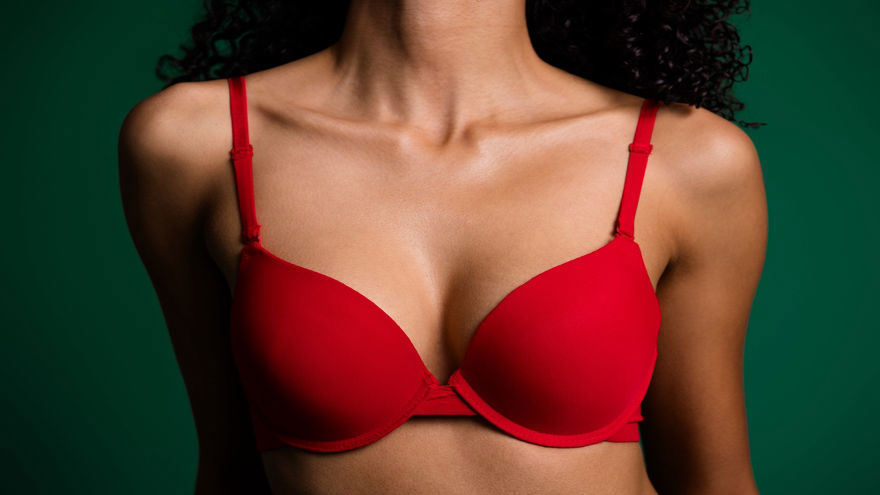
Before pregnancy, your breasts may have projected outward, creating a gentle curve or silhouette. But after childbirth and breastfeeding, many women notice that their breasts now lie flatter against the chest.
This is more than a visual change. The loss of projection can alter how clothes fit, affect posture, and even cause emotional discomfort during intimacy or self-care.
A well-executed mastopexy doesn’t just lift the breast — it reshapes it. Surgeons remove excess skin, tighten internal tissues, and often reshape the glandular tissue itself to give the breast a more youthful forward projection. At Dite, Dr. Lee emphasizes a vertical shaping technique that preserves a natural teardrop form — avoiding the overly round look that many patients wish to avoid.
4. Your breasts feel heavy, pendulous, or cause skin irritation under the fold
This sign isn’t just cosmetic — it can affect your comfort and health.
Postpartum breast ptosis can lead to skin-on-skin contact, creating moisture traps under the breast fold. This can cause rashes, redness, or fungal irritation — especially in humid climates like Korea’s summer season.
Heaviness and discomfort can also affect shoulder posture, subtly pulling the upper body forward and contributing to fatigue or back strain.
If your breasts feel like they’re weighing you down physically or emotionally, a lift can do more than improve appearance. It can recenter your balance — literally and figuratively. Many patients describe feeling “lighter” after surgery, even when no tissue is removed.
5. Your breast shape no longer feels like you — even in supportive clothing
This is perhaps the most personal — and important — sign.
For some, the decision to pursue a breast lift comes not from physical discomfort, but from a quieter, ongoing dissonance:
“No matter what bra I wear, it doesn’t feel like me anymore.”
If you avoid mirrors, feel uncomfortable in fitted clothes, or find your relationship with your body has shifted since becoming a mother, it’s valid. And more common than you think.
What many patients don’t realize is that a lift doesn’t have to be dramatic or obvious. At Dite, we often design subtle, proportional lifts that restore harmony between the breast, torso, and shoulders — without over-tightening or exaggerating the result.
This isn't about looking "done." It's about looking restored.
So — Do You Need a Breast Lift?
The word “need” is subjective in cosmetic surgery. You don’t need to meet a medical requirement. What matters most is how you feel in your body — and whether your current breast shape aligns with your self-image and goals.
Here’s what we recommend:\n\n- If your nipples sit below the fold or point downward, you may benefit from a lift.\n- If your breasts feel flat, heavy, or droop despite supportive bras, it’s worth a consultation.\n- If you’re done having children, a lift can be timed to deliver long-lasting, stable results — especially when combined with volume restoration or fat grafting.\n\nAt Dite, we offer personalized consultations with Dr. Jun Wook Lee, who brings over two decades of surgical expertise — including advanced fellowship training at MD Anderson Cancer Center — to each case. Using high-definition imaging, we plan your surgical roadmap with precision and artistry, ensuring results that fit your body and lifestyle.\n\n* * \n\n## Considering Your Options?\n\nIf you’re thinking about a subtle yet transformative enhancement after pregnancy, a breast lift could be the next step toward restoring confidence in your silhouette.\n\nA consultation with an expert like Dr. Jun Wook Lee at Dite Plastic Surgery can help you understand your options — whether that means a lift alone, a hybrid augmentation, or simply observing your current changes over time.\n\nYour post-baby body is still your body. A breast lift doesn’t change who you are — it brings you back into alignment with how you feel inside.\n\n * \n\n*Ready to explore a more natural, confident version of you? \nBook a tailored consultation at Dite Plastic Surgery in Gangnam, and let’s design the results that reflect your vision — not anyone else’s.
Articles
Evidence-based surgical guides, clinical insights, and recovery resources from Dite Plastic Surgery.
The Top 5 Benefits of Hip Implant Surgery
"Discover the top 5 benefits of hip implant surgery, from pain relief to improved mobility. Learn how it can enhance your quality of life today!"
Learn More
The Risks and Benefits of Hip Revision Surgery Explained
Discover the risks and benefits of hip revision surgery, from recovery to outcomes, to make informed decisions. Learn more today!
Learn More

Why Abdominal Surgery Is the Ultimate Solution for Stubborn Belly Fat
Discover why abdominal surgery is the best solution for stubborn belly fat. Learn benefits, risks & results to achieve your dream body today!
Learn More