Specialized Breast & Body Contouring Center in Seoul · Dedicated 1:1 International Patient Concierge

Articles
Breast Ptosis Surgery: How to Restore Fullness and Firmness
Restore youthful contour and firmness with breast ptosis surgery at Dite Plastic Surgery in Gangnam, Seoul.
Schedule a ConsultationBreast Ptosis Surgery: How to Restore Fullness and Firmness
by Dite Plastic Surgery, Gangnam, Seoul
There’s a quiet moment many women experience — standing in front of the mirror, seeing the reflection of breasts that no longer sit where they used to. The shape has softened, the fullness is gone, and the upper pole appears hollow or deflated. It’s not just about appearance — it’s about identity, confidence, and the connection to one’s own body.
At Dite Plastic Surgery in Gangnam, breast ptosis surgery isn’t just a technical correction — it’s a restoration of form and feeling. Whether due to aging, weight changes, or post-pregnancy shifts, breast sagging (or ptosis) is more common than most people realize — and fully treatable with modern, precise surgical approaches.
Let’s explore what causes ptosis, how to evaluate it, and the techniques we use to restore a naturally youthful contour — without overcorrection or a “done” look.
What Is Breast Ptosis — and Why Does It Happen?
Breast ptosis refers to the descent of breast tissue and nipple position due to loss of structural support. Simply put, the skin and internal ligaments (Cooper’s ligaments) that once held the breast high begin to stretch and weaken.
Common causes include:
- Aging and gravity
- Pregnancy and breastfeeding (milk production enlarges the breast, then volume is lost)
- Weight fluctuations
- Lack of skin elasticity or collagen
- Large, heavy breasts with poor structural support
In Korean cosmetic culture — where youthful, naturally contoured breasts are highly valued — even mild ptosis can feel disproportionately noticeable, especially when upper pole fullness is lost.
Degrees of Ptosis: How We Diagnose It at Dite
Before deciding on surgery, we classify the degree of breast ptosis — because the treatment plan changes based on severity.
Here’s a simplified breakdown:
Grade 1 (Mild):
- Nipple is at the level of the inframammary fold (IMF) or slightly below
- Breast still has decent upper pole volume
- Often corrected with implants alone
Grade 2 (Moderate):
- Nipple falls 1–3 cm below the fold
- Some breast tissue descends with it
- Requires a lift (mastopexy), with or without implant
Grade 3 (Severe):
- Nipple points downward, sitting well below the fold
- Entire breast mound is low on the chest
- Requires full mastopexy, often with internal support
At Dite, we use 3D imaging and manual soft tissue mapping to assess not just position, but projection, skin quality, and underlying breast parenchyma. It’s not just about lifting — it’s about reshaping.
How Breast Ptosis Surgery Works: Techniques We Use

1\. Mastopexy (Breast Lift)
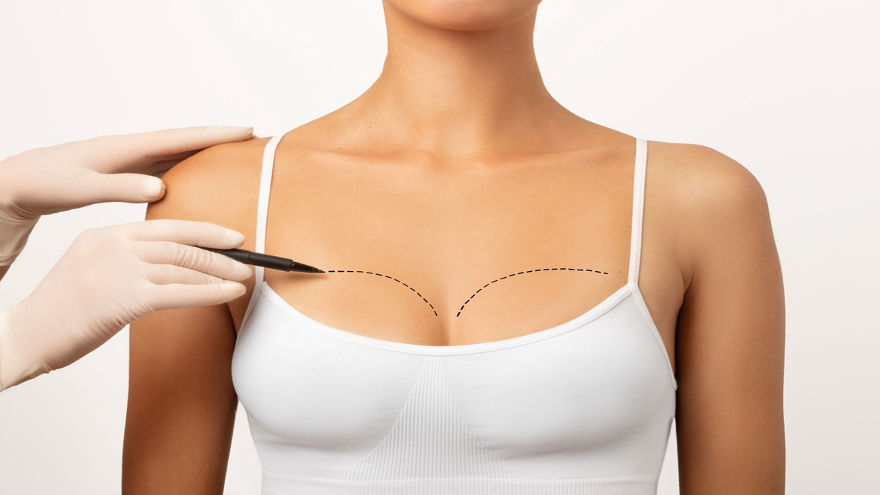
The core treatment for ptosis, a mastopexy involves removing excess skin, reshaping internal breast tissue, and repositioning the nipple-areola complex. Think of it as "sculpting" the breast into a higher, firmer shape.
At Dite, we customize the lift based on breast type:
- Periareolar (Donut) Lift: Minimal scarring, ideal for mild ptosis
- Vertical (Lollipop) Lift: For moderate sagging; leaves scar around areola and vertically down
- Anchor (Inverted-T) Lift: For significant sagging or larger breasts; provides the most reshaping power
We don’t follow a formula. Every surgical plan is tailored to your skin elasticity, volume, and lifestyle — whether you're active, postpartum, or considering future pregnancies.
2\. Hybrid Lift with Implants
For patients with both volume loss and sagging, we often recommend combining a lift with breast augmentation using silicone implants or fat grafting. This is especially effective when upper pole fullness is the primary concern.
Surgical insight: A common mistake is using large implants to “lift” the breast. In truth, implants add weight — worsening ptosis over time if not paired with support. That’s why hybrid techniques are key to long-term outcomes.
3\. Internal Bra Technique
In cases of recurrent ptosis or weak skin support (common after major weight loss), we may reinforce the lift with an internal mesh or permanent sutures — often called the internal bra. This adds hidden structural support from within, helping maintain results longer.
What Many Patients Don’t Realize About Breast Lifts
We see this often: patients arrive thinking they “just need implants,” but their nipple position and skin laxity suggest otherwise.
Here’s what’s rarely explained online:
- Implants don’t lift nipples — only skin and tissue work does
- Lifting a breast without replacing volume may leave it flat on top
- The best results often come from combining skin tightening, internal reshaping, and volume restoration
That’s why consultations at Dite are never rushed. We plan breast ptosis surgery like a tailored garment — measuring, mapping, and refining to suit your frame and aesthetic vision.
Recovery and Healing: What to Expect
Breast ptosis surgery is performed under general anesthesia at our certified surgical center in Gangnam. Most procedures take 2–3 hours, depending on complexity.
Typical recovery timeline:
- Days 1–3: Swelling, tightness, and some discomfort — managed with light pain meds
- Week 1: Stitches checked or removed; light activity resumes
- Weeks 2–4: Bruising fades; patients begin to see contour improvements
- Week 6+: Final shape settles; scars begin to fade
- 3–6 months: Skin fully adapts to new form; breast takes on its natural flow and softness
We provide all patients with scar care regimens, including silicone taping, laser scar treatments, and lymphatic drainage massage — helping results stay clean and refined.
Will the Scars Be Obvious?
It’s a fair concern. In a culture like Korea’s — where subtlety and refinement are key — patients often worry that lift scars will be visible or “too surgical.”
But with proper technique and aftercare, most scars fade to hairline-thin lines within a few months. We place incisions along natural contours, and we use fine, layered closure to reduce tension on the skin — a critical factor in scar quality.
If your priority is minimal scarring, we’ll recommend approaches like the donut or short-scar vertical lift, which offer a balance between lifting power and aesthetic subtlety.
When Is the Right Time for Breast Ptosis Surgery?
The answer isn’t tied to age — it’s tied to how you feel in your body. If you:
- Avoid certain clothes because of sagging
- Feel discomfort from skin irritation under the breast fold
- Notice asymmetry or nipple descent after pregnancy
- Regret previous implants due to bottoming out or drooping
…then it may be time to explore options.
We often tell patients: this isn’t about chasing youth. It’s about bringing your body into alignment with how you want to move through the world — strong, lifted, and in proportion.
Why Choose Dite for Breast Lift Surgery?
At Dite Plastic Surgery, breast ptosis isn’t a secondary concern — it’s a core specialty. Led by Dr. Jun Wook Lee, with over 20 years of surgical experience and advanced training from MD Anderson Cancer Center, our clinic focuses exclusively on breast and body contouring.
Here’s what sets us apart:
- Precision planning using 3D simulations and soft tissue mapping
- Hybrid techniques tailored to your anatomy — not trends
- Post-op care excellence, including laser therapy and lymphatic recovery
- Natural, elegant results — never overfilled or overcorrected
We don’t believe in one-size-fits-all outcomes. Whether you’re a mother in your 30s or a woman in your 50s seeking revitalization, your surgical plan will reflect your lifestyle, body type, and aesthetic vision.
Restore Lift, Restore Confidence
If your breasts no longer reflect the energy, elegance, or proportion you want to project — breast ptosis surgery can help you feel balanced again. Whether it’s a subtle lift or a complete reshaping, we’re here to guide you through it with skill, clarity, and care.
Ready to explore your options?
Schedule a consultation at Dite Plastic Surgery in Gangnam and let’s design a plan that brings back fullness, firmness, and confidence — on your terms.
Articles
Evidence-based surgical guides, clinical insights, and recovery resources from Dite Plastic Surgery.

The Top 5 Benefits of Hip Implant Surgery
"Discover the top 5 benefits of hip implant surgery, from pain relief to improved mobility. Learn how it can enhance your quality of life today!"
Learn More

The Risks and Benefits of Hip Revision Surgery Explained
Discover the risks and benefits of hip revision surgery, from recovery to outcomes, to make informed decisions. Learn more today!
Learn More

Why Abdominal Surgery Is the Ultimate Solution for Stubborn Belly Fat
Discover why abdominal surgery is the best solution for stubborn belly fat. Learn benefits, risks & results to achieve your dream body today!
Learn More