Specialized Breast & Body Contouring Center in Seoul · Dedicated 1:1 International Patient Concierge


Articles
How to Treat Severe Sagging Breasts with Gigantomastia Surgery
Struggling with severe breast sagging from gigantomastia? Learn how advanced breast reduction surgery can restore comfort, shape, and confidence — with expert care from Dite Plastic Surgery in Seoul.
Schedule a ConsultationHow to Treat Severe Sagging Breasts with Gigantomastia Surgery
A surgical guide to restoring form, function, and comfort for patients with extreme breast enlargement
For some women, overly large breasts aren’t just an aesthetic concern — they’re a daily struggle. From chronic back pain and posture issues to emotional distress and difficulty finding clothes that fit, the symptoms of gigantomastia can affect nearly every aspect of life.
In South Korea, where body proportions and silhouette harmony are culturally emphasized, patients with this condition often suffer in silence, unsure whether surgery is appropriate or even available. But for those living with severe sagging caused by gigantomastia, specialized surgical solutions do exist — and they can be life-changing.
At Dite Plastic Surgery in Seoul’s Gangnam medical hub, we work with patients experiencing extreme breast ptosis due to gigantomastia. With a focus on individualized design and expert-level surgical execution, we help restore not only the body’s shape, but also quality of life.
Here’s what patients need to know.
What Is Gigantomastia — and How Does It Affect the Breasts?
Gigantomastia refers to abnormal and excessive breast growth, typically resulting in a breast volume that is multiple times larger than standard anatomical proportions.
While there is no universal volume threshold, most surgeons classify gigantomastia as breasts requiring removal of more than 1,500 grams per breast (though this varies by body size). It can occur:
- During puberty (juvenile gigantomastia)
- During pregnancy (gestational gigantomastia)
- Spontaneously, without clear hormonal causes
Regardless of cause, the condition often leads to severe sagging (Grade 3 ptosis or higher), skin stretching, and displacement of the nipple to a point far below the natural breast fold. In extreme cases, the nipples may sit at or below the level of the navel.
When Sagging Goes Beyond Skin — Structural Changes in Gigantomastia
Unlike typical breast sagging, which often involves mild skin laxity and tissue deflation (as seen post-pregnancy), gigantomastia causes deep, structural descent of both skin and internal breast components. This includes:
- Weakened Cooper’s ligaments, which normally support breast tissue
- Elongation of the skin envelope, especially the lower pole
- Displacement of the nipple-areolar complex, often requiring full repositioning
- Hypertrophy of glandular and fatty tissue, leading to significant weight and volume
In many patients, the breast becomes pendulous — not just large, but profoundly low-hanging and functionally uncomfortable.
At this level of ptosis, traditional mastopexy (breast lift) is not enough. What’s required is gigantomastia reduction surgery — a comprehensive approach that removes excess tissue, reshapes the breast mound, and repositions the nipple for both health and harmony.
Surgical Treatment: Breast Reduction with Functional Lift
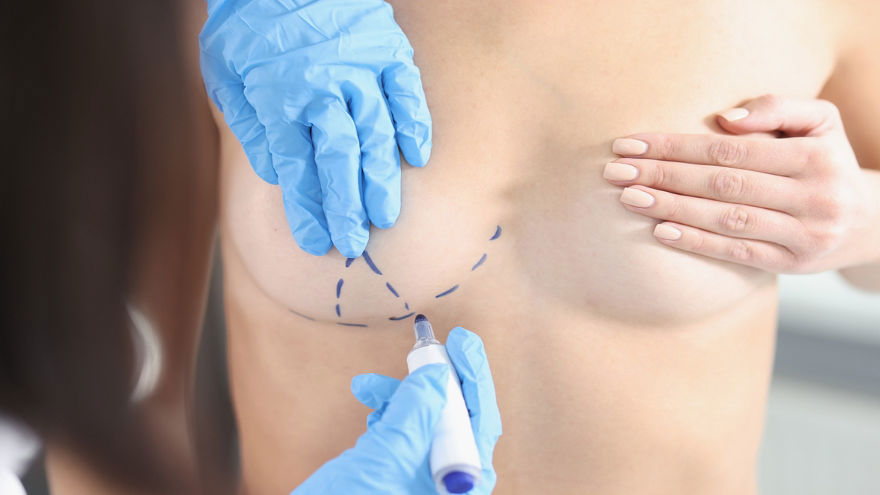
What the Surgery Involves
Treating severe sagging caused by gigantomastia requires breast reduction surgery, also known as reduction mammoplasty, but with specialized techniques tailored for extreme cases.
At Dite Plastic Surgery, Dr. Jun Wook Lee often uses a vertical or inverted-T (anchor) incision to allow for:
- Wide access to remove large volumes of tissue
- Reshaping of the internal breast structure (parenchymal reshaping)
- Precise nipple-areola repositioning, often moved upward by 10–15+ cm
- Skin tightening to re-drape the breast in a natural teardrop form
For patients with gigantomastia, this isn’t just cosmetic — it’s reconstructive in nature, aimed at alleviating pain, improving function, and restoring anatomical balance.
Nipple Viability and Free Nipple Graft
In extreme cases where the distance between the current and ideal nipple position exceeds safe limits for pedicled repositioning, surgeons may recommend a free nipple graft — where the nipple is removed, preserved, and grafted into a new position.
While this sacrifices nipple sensation and breastfeeding ability, it ensures vascular safety and aesthetically correct placement, especially in cases of ultra-severe ptosis.
At Dite, this option is discussed thoroughly with patients. We use vascular mapping and 3D simulation tools to determine whether a traditional or graft-based approach is safest for the individual case.
What Many Patients Don’t Realize About Gigantomastia Surgery
1. It’s not just about size — it’s about proportion and projection.
Patients often assume that reduction means "making breasts small." But the surgical goal is balance, not flatness. A properly performed reduction maintains feminine curves with improved lift and positioning.
“We’re not trying to erase the breast — we’re trying to restore it to its rightful place on the body,” says Dr. Lee. “That means refining the silhouette, not just reducing the weight.”
2. Results depend heavily on surgical design.
A generic reduction may resolve the weight issue, but without detailed internal reshaping, the breast can look boxy or uneven. At Dite, we use internal pillar suturing and customized lower pole shaping to ensure a natural slope and lasting firmness.
3. Recovery is often easier than expected — and results are immediate.
Despite the scale of the procedure, most patients report immediate relief from neck and shoulder pain, better breathing, and a “lightness” they haven’t felt in years. With modern techniques and scar care, healing is faster and scars fade well over time.
Who Is a Good Candidate?
You may be a candidate for gigantomastia reduction if you:
- Have extremely large breasts causing physical or emotional discomfort
- Experience rashes, posture issues, or shoulder grooves from bra straps
- Have nipples that sit far below the breast fold or point downward
- Want to restore mobility, confidence, and proportional silhouette
- Are not planning future breastfeeding (especially if a free nipple graft may be used)
Recovery and Long-Term Results

Recovery Timeline at a Glance:
- Day 1–3: Compression bra, minor drainage, discomfort manageable with oral pain meds
- Week 1–2: Return to light daily activities
- Week 4: Swelling significantly reduced; begin light stretching
- 3 Months: Scars begin to fade; breasts settle into shape
- 6–12 Months: Final results with softening of tissue and natural feel
At Dite, we support recovery with lymphatic massage, scar laser therapy, and posture care, all included in our post-op program.
Why Choose Dite Plastic Surgery for Gigantomastia Treatment?
Located in Seoul’s prestigious Gangnam district, Dite Plastic Surgery is known for its body-focused surgical precision, particularly in complex breast reshaping cases. Dr. Jun Wook Lee brings over 20 years of surgical experience, with training from MD Anderson Cancer Center — a global leader in reconstructive techniques.
Our approach to gigantomastia treatment includes:\n\n- Detailed pre-op planning with 3D simulation\n- Advanced surgical techniques for both function and beauty\n- Individualized care pathways, from first consult to final follow-up\n- Discreet, luxurious recovery environment, ideal for both local and international patients\n* * \n\n## Reclaim Comfort, Confidence, and Your Natural Shape\n\nIf severe breast sagging due to gigantomastia is affecting your health, self-esteem, or daily life, know that you have options — and that treatment is not just possible, but profoundly effective.\n\nA well-performed reduction and lift can transform not just your body, but your experience of living in it.\n\n * \n\n*Ready to take the next step? \nSchedule a private consultation at Dite Plastic Surgery in Seoul. Let’s design a result that honors both your comfort and your confidence — through precision, proportion, and expert care.\n\n* * \n\nDite Plastic Surgery — Where form meets function, and aesthetic excellence begins with you.*
Articles
Evidence-based surgical guides, clinical insights, and recovery resources from Dite Plastic Surgery.

The Top 5 Benefits of Hip Implant Surgery
"Discover the top 5 benefits of hip implant surgery, from pain relief to improved mobility. Learn how it can enhance your quality of life today!"
Learn More

The Risks and Benefits of Hip Revision Surgery Explained
Discover the risks and benefits of hip revision surgery, from recovery to outcomes, to make informed decisions. Learn more today!
Learn More

Why Abdominal Surgery Is the Ultimate Solution for Stubborn Belly Fat
Discover why abdominal surgery is the best solution for stubborn belly fat. Learn benefits, risks & results to achieve your dream body today!
Learn More