Specialized Breast & Body Contouring Center in Seoul · Dedicated 1:1 International Patient Concierge

Articles
Is Abdominal Surgery the Key to a Flatter Stomach After Weight Loss?
A clear, expert guide to achieving a flatter stomach after weight loss. Learn when abdominal surgery helps and how Dite Plastic Surgery crafts natural results.
Schedule a ConsultationIs Abdominal Surgery the Key to a Flatter Stomach After Weight Loss?
An in-depth, experience-driven guide from the perspective of Dite Plastic Surgery, Gangnam
Most people imagine that once they lose the weight — whether through diet, exercise, or bariatric treatment — the stomach will naturally tighten on its own. But many of the patients who walk into our clinic in Seocho share the same quiet frustration:
“I’m healthy. I’m lighter. But why doesn’t my stomach look the way I imagined?”
It’s one of the most common emotional contradictions after weight loss. You’ve done the hard work, yet the mirror still reflects lax skin, stubborn lower-belly fat, or a soft fullness that refuses to budge. Many patients blame themselves when, medically speaking, nothing is wrong — the tissues simply changed in ways that lifestyle alone can’t reverse.
This is where abdominal surgery often enters the conversation. But is it truly the key to a flatter stomach? Or is that answer more nuanced?
Below, I’ll walk you through how we approach this question at Dite Plastic Surgery, a clinic deeply rooted in breast and body contouring with more than a decade of experience treating both Korean and international patients seeking refined abdominal shaping.
Why the Stomach Doesn’t Always Flatten After Weight Loss
One of the first things I tell patients is surprisingly simple: weight loss affects fat, but the shape of the abdomen is also governed by skin elasticity, muscle tension, and internal fat structures. Not all of these respond to effort and discipline.
1. Skin Can Lose Its “Memory”
When the body expands — whether from weight gain, pregnancy, or hormonal change — the skin stretches like an overstretched ribbon. If this stretches beyond its biologic limit, it doesn’t “snap back,” even when fat volume decreases.
Patients often ask, “Will more cardio tighten it?”
If the collagen fibers are damaged or thinned, no amount of calorie burning can thicken them again.
2. Muscles May Have Separated
Many men and women — especially postpartum patients — experience rectus diastasis, where the abdominal muscles drift apart. Core exercises strengthen the muscles but cannot physically pull them back together if the connective tissue has thinned.
We see this more often than people realize, even in patients who appear fit and strong.
3. Stubborn Fat Isn’t Symmetrical
Some pockets of fat, particularly around the lower abdomen and flanks, are hormonally driven and genetically persistent. Weight loss shrinks fat cells but doesn’t remove them — and not all fat cells shrink equally.
These three factors explain why even patients who lose 20, 30, or 50 kilograms still struggle with:
- A lower-belly “pouch”
- Loose folds that drape when bending
- Skin wrinkling around the navel
- A soft, bulging midline despite exercise
Understanding this foundation is essential before considering surgery.
When Abdominal Surgery Becomes the Most Effective Solution
Many people hope there’s a “secret workout” or a tightening cream that surgeons just aren’t telling them about. I wish it were that easy.
What many patients don’t realize is that abdominal surgery is not a shortcut — it’s a structural correction. When diet and exercise reach their limit, surgery addresses the elements that lifestyle cannot.
At a high-volume body clinic like Dite, the three most transformative procedures are:
1. Full or Mini Abdominoplasty (Tummy Tuck)
This is for patients with loose skin, muscle separation, or both.
What it does:
- Removes stretched or sagging skin
- Repairs muscle separation
- Repositions the navel (in a full abdominoplasty)
- Tightens the entire abdominal wall
If a patient says, “My stomach folds when I sit,” or “My belly feels soft even though I work out,” this usually points toward the need for a structural repair.
2. Abdominal Liposuction
Ideal for those who have good skin elasticity but stubborn fat.
What it does:
- Removes resistant fat pockets
- Shapes the waistline and contours the upper/lower abdomen
In Korea, where natural, elegant silhouettes are preferred, liposuction is often performed with high-frequency energy or ultrasound-assisted devices to contract the skin while sculpting.
3. Hybrid Contouring
This is increasingly common at our clinic — combining:
- Liposuction for shaping
- Skin tightening technologies
- Small-area skin excision if needed
It’s a middle path for patients not ready for a full tummy tuck but whose skin needs more help than liposuction alone can give.
How Surgeons Evaluate Whether You Truly Need Surgery
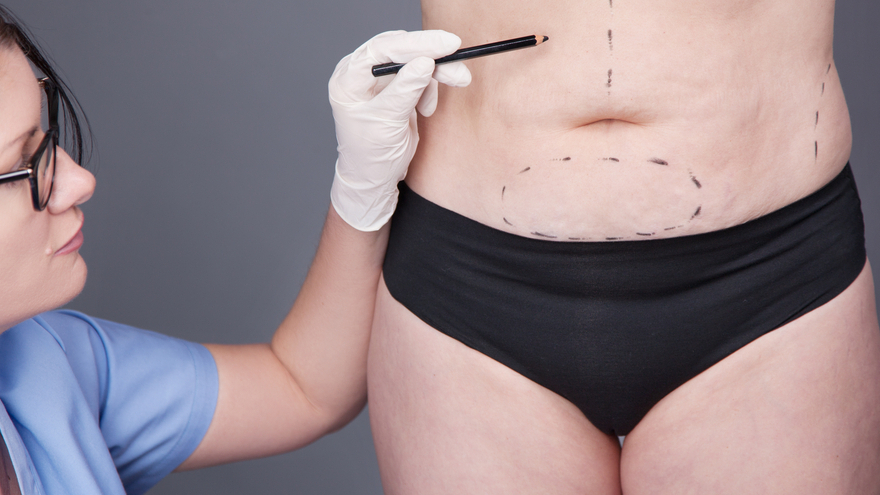
Every stomach tells a story, and one of the most important parts of our consultation process is diagnosing what type of issue is preventing a flat appearance.
At Dite, Dr. Jun Wook Lee performs a multi-layer evaluation that most patients find surprisingly enlightening:
1. Skin Elasticity Mapping
We gently lift and fold areas of skin to see whether the tissue rebounds. If the skin hangs or creases, surgery becomes more appropriate.
2. Fat Thickness vs. Distribution
Some patients have very thin abdominal fat but a stubborn lower pouch — a sign that volume loss won’t help, but contouring will.
3. Muscle Integrity
We check for diastasis by palpation and ultrasound. Many postpartum patients are shocked to learn that their muscles are wider apart than expected.
4. Natural Body Proportion
This is a detail that is often forgotten online but matters deeply in Gangnam’s aesthetic standards:
A flat stomach is not just about the abdomen — it’s about how the waist transitions into the hips and ribcage.
A beautifully contoured abdomen flows naturally with the body’s curves. This philosophy influences every surgical plan at Dite.
What Surgery Can — and Cannot — Achieve
A well-performed abdominoplasty or liposuction can dramatically enhance confidence, posture, and mobility. Patients often tell us:
- “My clothes fit me the way I imagined after losing weight.”
- “I feel like my body finally matches the effort I put in.”
- “I look toned even when I’m relaxed.”
But surgery does not replace weight loss, nor can it correct internal visceral fat around the organs — something no surgeon can remove.
A surgeon’s role is not to reshape your biology, but to refine what weight loss couldn’t complete.
The Emotional Side: Why This Decision Feels Bigger Than Expected
Patients are often hesitant to consider surgery after weight loss because they fear it feels like “cheating.” I see this emotional conflict all the time.
Here’s the truth I wish more people heard:
Surgery after weight loss isn’t a shortcut — it’s a finishing step.
You’ve already done the hardest part: changing the relationship with your body. Abdominal surgery simply restores the structure that time or weight fluctuations altered.
And in a place like Gangnam, where aesthetic expectations are high but recovery preferences are discreet, many patients appreciate the combination of precision surgery and supportive aftercare we provide at Dite — including swelling management, lymphatic treatments, and laser-assisted healing.
Who Benefits the Most from Abdominal Surgery?
There isn’t a single “ideal” patient — only patterns we see frequently:
1. Patients with Significant Weight Loss
Those who lost 10–50 kg often have deflated skin or folds that no amount of diet can correct.
2. Postpartum Patients
Even very slim mothers can experience lax skin and muscle separation that makes the stomach appear rounded.
3. Patients with Stubborn Lower-Abdominal Fat
This area is biologically resistant, especially in women. Liposuction or hybrid contouring often produces remarkable clarity in the waistline.
4. Individuals Seeking Improved Proportions
Sometimes the stomach isn’t the only issue — it’s about creating harmony between the abdomen, waist, and hips.
This is where Dite’s hip reshaping and waistline contouring often integrate seamlessly with abdominal work.
How Dite Plastic Surgery Approaches Abdominal Refinement
Dite is fundamentally a body-focused clinic. Because we’re not a general plastic surgery center, our approach is specialized, precise, and deeply aesthetic-driven.
Our Philosophy in Practice
Every abdomen is sculpted, not simply reduced.
Dr. Lee designs the contour based on the patient’s unique muscle lines and framework — similar to carving out natural highlights on a sculpture.Technology supports artistry.
High-frequency contouring devices, laser tightening, and energy-assisted liposuction help refine tissue while minimizing trauma.Recovery is part of the aesthetic result.
Many international patients choose us for our structured post-op system: swelling care, lymphatic drainage, and scar optimization protocols.
This combination of training — including Dr. Lee’s experience at MD Anderson Cancer Center — and aesthetic sensitivity is what draws patients seeking natural yet transformative abdominal refinement.
So, Is Abdominal Surgery the Key to a Flatter Stomach?
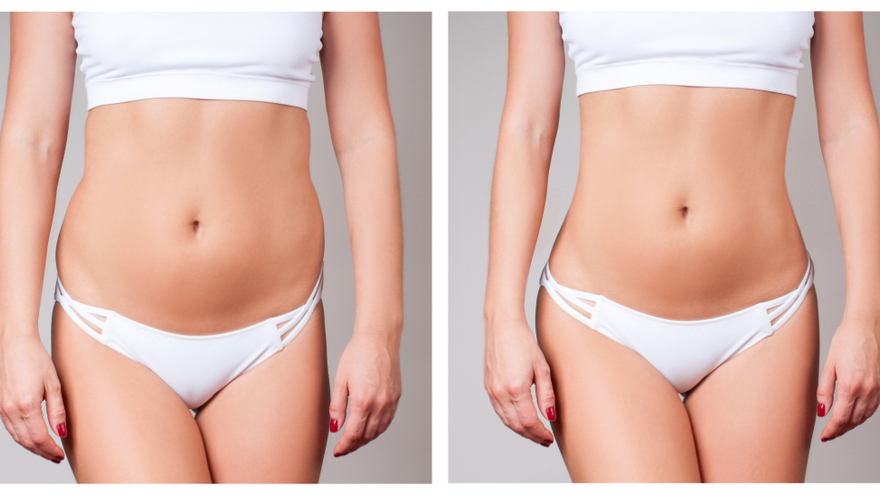
Here’s the honest, medically grounded answer:
It can be — but only when the cause of abdominal fullness is something lifestyle can’t change.
If your main issue is:
- Loose or deflated skin
- Muscle separation
- Stubborn genetic fat pockets
- A disproportionate waistline
…then yes, surgery is often the most direct, reliable solution.
If your skin elasticity is good and fat volume is the main issue, liposuction or hybrid contouring may be all you need.
And if you’re unsure — you’re not alone. Most patients can’t tell which factor is causing their stomach shape. That’s exactly why a personalized evaluation matters.
If You’re Considering Abdominal Refinement
When your body has changed but the silhouette hasn’t caught up, it’s completely normal to feel conflicted or even discouraged. Surgical intervention shouldn’t be a rushed or pressured decision — it should be an informed one.
If you’re considering a flatter, more refined stomach and want guidance shaped by real experience and body-focused expertise, a consultation at a specialized clinic like Dite Plastic Surgery can help you understand which options truly match your body and your goals.
A tailored evaluation with Dr. Jun Wook Lee can give you a clear, honest roadmap — whether that includes surgery, contouring, or a more conservative approach.
Articles
Evidence-based surgical guides, clinical insights, and recovery resources from Dite Plastic Surgery.

The Top 5 Benefits of Hip Implant Surgery
"Discover the top 5 benefits of hip implant surgery, from pain relief to improved mobility. Learn how it can enhance your quality of life today!"
Learn More
The Risks and Benefits of Hip Revision Surgery Explained
Discover the risks and benefits of hip revision surgery, from recovery to outcomes, to make informed decisions. Learn more today!
Learn More

Why Abdominal Surgery Is the Ultimate Solution for Stubborn Belly Fat
Discover why abdominal surgery is the best solution for stubborn belly fat. Learn benefits, risks & results to achieve your dream body today!
Learn More