Personalized Medical Care & Dedicated International Patient Concierge


Medical Guide
Re-intervention Rates: Tumescent Liposuction and Body Contouring in Korea
Re-intervention Rates: Tumescent Liposuction and Body Contouring in Korea The demand for body contouring in South Korea has seen a significant shift from traditional "fat removal" to high-precision "body sculpting." According to industry market reports, the Korean aesthetic.
Schedule a ConsultationRe-intervention Rates: Tumescent Liposuction and Body Contouring in Korea
The demand for body contouring in South Korea has seen a significant shift from traditional "fat removal" to high-precision "body sculpting." According to industry market reports, the Korean aesthetic surgery market is projected to grow at a CAGR of approximately 13.5% through 2030, driven by an increasing preference for minimally invasive procedures. However, with the rise in procedure volume, a critical data point has emerged for patients: the re-intervention rate. National clinical trends suggest that secondary procedures or "touch-ups" occur in roughly 5% to 15% of traditional liposuction cases, often due to contour irregularities or insufficient fat removal.
At Dite Plastic Surgery, the focus is on mitigating these risks through advanced surgical protocols. This article explores the benchmarks for tumescent liposuction in Korea, comparing conventional methods with high-precision body contouring to help patients make informed, data-driven decisions.
Why Do Liposuction Re-intervention Rates Matter in Korea?
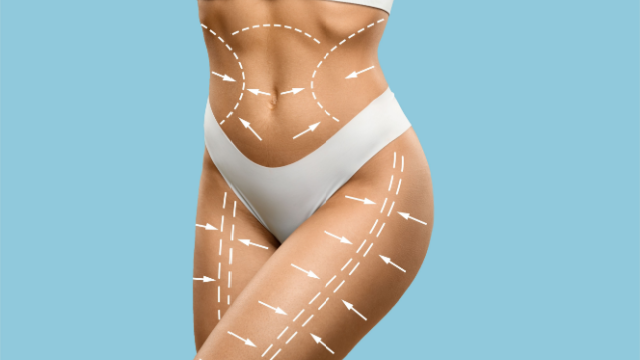
For many Korean and international patients, the goal of body contouring is a "one-and-done" transformation. A re-intervention—meaning a second surgery to correct or enhance the first—increases the total cost, recovery time, and risk of scar tissue formation (fibrosis).
Current data from aesthetic medicine surveys indicates that:
- Contour Irregularities: The most common reason for re-intervention (asymmetry or "lumpiness").
- Patient Expectations: High standards for the "athletic" or "S-line" silhouette in Korea drive a higher demand for precision than in many other global markets.
- Economic Impact: A secondary procedure can cost 1.5x to 2x more than the primary surgery due to the complexity of operating on previously treated tissue.
Conventional Liposuction vs. Modern Standards: Costs and Limitations
The standard approach to fat reduction in Korea has traditionally relied on manual aspiration. While effective for volume reduction, this method has specific benchmarks and limitations:
- Average Cost (Korea): Typically ranges from 2,000,000 KRW to 7,000,000 KRW per area, depending on volume.
- Recovery Benchmarks: Often involves 7–10 days of significant downtime and the requirement of compression garments for 1–3 months.
- Common Limitations:
- Inconsistency: Manual techniques may leave behind small pockets of fat, leading to revision requests.
- Skin Laxity: Traditional methods do not always address skin tightening, which can lead to sagging after fat is removed.
- Higher Trauma: Increased risk of bruising and swelling compared to energy-assisted or high-precision methods.
The Advanced Approach: High-Precision Tumescent Body Contouring
The modern gold standard at specialized clinics like Dite Plastic Surgery is High-Precision Tumescent Body Contouring. This approach treats liposuction not as a bulk removal process, but as an architectural refinement of the body's natural proportions.
How it Works
This method utilizes a "tumescent" solution (a mixture of saline, lidocaine, and epinephrine) to swell the fat cells, making them easier to remove while constricting blood vessels to minimize bleeding. The "High-Precision" element involves using specialized micro-cannulas and advanced visualization to sculpt near the surface of the skin without causing irregularities.
Why it is Considered Tech-Enabled
Unlike older methods, this approach may integrate ultrasound or vibration-assisted technologies to emulsify fat before suction. This reduces the physical force required by the surgeon, leading to:
- Lower Re-intervention Rates: Greater accuracy in fat removal reduces the need for "touch-ups."
- Enhanced Skin Adhesion: Better preservation of the connective tissue fibers helps the skin "snap back" post-surgery.
Q: Is High-Precision Body Contouring in Korea worth the higher initial cost?
A: Yes. By significantly lowering the statistical likelihood of a secondary corrective surgery (re-intervention), patients often save money and avoid the psychological stress of a second recovery period. The precision-led approach ensures a more symmetric and natural result from the start.
Data & Outcomes: Comparing the Pathways
When analyzing the "long-term cost curve" of body contouring, the initial price tag is only one variable. The true value is found in the success rate of the primary procedure.
| Feature | Conventional Liposuction | High-Precision Body Contouring |
|---|---|---|
| Primary Goal | Bulk Fat Reduction | Silhouette Sculpting & Definition |
| Estimated Re-intervention Rate | 10% – 15% | < 5% (Clinic Benchmark Dependent) |
| Recovery Time (Active) | 10 – 14 Days | 3 – 5 Days |
| Risk of Contour Rippling | Moderate | Low (due to micro-cannula use) |
| Skin Tightening Effect | Minimal | Moderate to High |
Note: Qualitative outcomes suggest higher patient satisfaction scores (90%+) with precision-led protocols compared to bulk-removal methods.
Local Korea Insights: The "Quick-Recovery" Culture
Korea’s medical infrastructure is uniquely aligned with high-tech, minimally invasive care. Patients in Seoul typically prioritize:
- Minimal Downtime: The ability to return to office work within days.
- Safety & Certification: Preference for clinics utilizing the latest approved technologies and specialized surgeons.
- Aesthetic Harmony: A shift away from "excessive" surgery toward "natural" enhancement.
The growth of the Korean regenerative and aesthetic market (exceeding USD 470M) reflects a sophisticated patient base that values precision over price alone.
Where Dite Plastic Surgery Fits in Body Contouring in Korea

Dite Plastic Surgery specializes in advanced body contouring with a focus on long-term aesthetic stability. The clinic distinguishes itself through:
- Specialized Protocols: Utilizing High-Precision Tumescent techniques to minimize tissue trauma.
- Expert Assessment: A rigorous candidacy phase where skin elasticity and fat distribution are mapped to prevent post-operative sagging.
- Comprehensive Follow-up: A structured recovery program designed to monitor the settling of tissues and ensure the highest possible symmetry.
The lead surgeons at Dite Plastic Surgery bring years of experience in aesthetic refinement, ensuring that every High-Precision Body Contouring procedure is tailored to the individual’s unique anatomy.
Conclusion
Body contouring in Korea has evolved far beyond simple fat removal. While conventional liposuction remains an option, the data suggests that High-Precision Tumescent methods offer a more reliable pathway with lower re-intervention rates and superior aesthetic outcomes. By prioritizing precision and tech-driven care, patients can achieve their desired results with greater safety and efficiency.
Patients considering High-Precision Tumescent Body Contouring at Dite Plastic Surgery in Korea can schedule a consultation to discuss whether this approach is suitable for their specific aesthetic goals and physical condition.
More Articles
Continue reading our clinical guides.
Economic Impact of Hybrid Breast Surgery Protocols in South Korea
Economic Impact of Hybrid Breast Surgery Protocols in South Korea The aesthetic landscape in South Korea is undergoing a structural shift.
Learn More

Digital Diagnostics: High-Def Endoscopy in Modern Breast Surgery
Digital Diagnostics: High-Def Endoscopy in Modern Breast Surgery With the South Korean cosmetic surgery market valued at approximately USD 1.6 billion in 2024 and projected to reach USD 4.1 billion by 2035, the demand for precision-based medical interventions has never been.
Learn More

The Economic Shift Toward Minimally Invasive Breast Revision Surgery Costs
The Economic Shift Toward Minimally Invasive Breast Revision Surgery Costs For many patients, the decision to undergo a primary breast augmentation is a major life milestone, but for approximately 10% to 15% of individuals globally, a second "revision" procedure becomes a.
Learn More