Specialized Breast & Body Contouring Center in Seoul · Dedicated 1:1 International Patient Concierge

Articles
Signs Your Hip Implant May Need Correction
Noticing hip asymmetry, discomfort, or visible implant edges after surgery? Learn the key signs your hip implant may need correction — and how expert revision at Dite Plastic Surgery in Seoul can restore your ideal shape.
Schedule a ConsultationSigns Your Hip Implant May Need Correction
Understanding When Refinement or Revision Is the Right Choice
Not every cosmetic result tells the full story at first glance. For patients who’ve undergone hip enhancement — whether through fat grafting or silicone implants — the goal is often to achieve a naturally fuller, more balanced silhouette. But what happens when that result doesn’t align with expectations, or changes over time in a way that feels off?
At Dite Plastic Surgery in Seoul’s Gangnam district, we regularly consult with patients seeking not just their first procedure, but their second chance — individuals who had hip augmentation elsewhere and are now experiencing discomfort, asymmetry, or a result that no longer fits their body or lifestyle.
If you’ve been wondering whether your hip implant might need correction, you’re not alone. Below, we’ll walk through the most common signs we see in clinic, explain what might be happening underneath the surface, and share how modern surgical refinement can restore balance and comfort.
What Makes a Hip Implant Go Wrong?
Hip implants can be a helpful solution for patients with limited body fat who desire more volume in the hip area. When carefully selected and correctly placed, they can enhance curves in a subtle, harmonious way.
But when the implant is too large, poorly positioned, or mismatched to your anatomy, the result can feel unnatural — or even become physically uncomfortable. Some of the most common complications include:
- Implants sitting too high or low
- Visible or palpable implant edges
- Asymmetry between sides
- Stiffness when walking or sitting
- Disproportionate appearance
These issues don’t always show up right away. In fact, many patients notice something is off several months or even years after surgery as their body changes, soft tissues settle, or the implant shifts slightly within its pocket.
1. You Notice Asymmetry That Wasn’t There Before
Some natural asymmetry is normal every human body has it. But if your hips looked balanced right after surgery and now one side appears fuller, lower, or rounder than the other, it could be a sign of implant migration or uneven healing.
This can also happen if the surrounding fat changes over time, or if one side experienced higher fat absorption (in the case of previous grafting). Even small shifts can create a noticeable imbalance in tight clothing or swimwear.
What many patients don’t realize is that asymmetry may not always be due to the implant itself. At Dite, we often uncover subtle issues in the surrounding tissues that require reshaping — not necessarily removal.
2. There’s a Hard or Visible Edge
A well-done hip implant should feel smooth and unobtrusive. If you can easily feel the edge of your implant, or see its outline under the skin — especially when flexing or sitting — that’s a strong sign the implant was placed too superficially, or that the soft tissue coverage was inadequate.
This is more likely to occur in slimmer patients or in surgeries where minimal padding was left between the skin and implant surface.
Sometimes, hardening around the implant (known as capsular contracture) can also create firmness or visible distortion. While rare in the hip compared to the breast, it’s a complication that needs surgical attention.
3. Sitting or Movement Feels Unnatural or Painful
Your hips play an essential role in movement. If sitting feels uncomfortable — or if you feel like you're perched on something unnatural — it may indicate poor placement or sizing.
We’ve heard from patients who describe their hips as feeling “tight,” “pinched,” or “off-balance” when walking. This can happen when implants are placed too high, inserted into the wrong plane, or are simply too rigid for the patient’s natural motion range.
In these cases, implant revision isn’t about vanity — it’s about restoring functional comfort and body confidence.
4. The Volume Looks Overdone or Unbalanced
Hip contouring should flow naturally with the waist and thighs. When volume is exaggerated — or if the implant appears too round or bulbous — it can disrupt your overall silhouette.
Sometimes, a result looks unnatural not because of the implant itself, but because the surrounding areas weren’t shaped to match. At Dite, we often correct overfilled hips by reducing implant size, adding selective liposuction, or combining revision with soft fat grafting for smoother curves.
We call this approach contour harmony — where the goal isn’t to add or subtract, but to balance.
5. The Skin Over the Implant Looks Thin or Unnatural
If your skin looks shiny, stretched, or slightly discolored over the implant area, it may be a sign that the tissue covering is too thin — either from over-tension, implant pressure, or natural thinning over time.
This condition can progress slowly, but in severe cases, it can lead to skin breakdown or implant exposure. When we catch this early, we can often resolve it by removing or repositioning the implant, then rebuilding volume with your own fat or regenerative support.
If left untreated, however, it can become a surgical emergency. That’s why ongoing follow-up is so important — especially in patients with very low body fat.
6. You Feel Emotionally Disconnected from Your Body
This one may not show up in the mirror, but it matters just as much. If you look at your hips and feel regret, self-consciousness, or like the result no longer reflects who you are — that’s a valid sign.
Some patients feel restricted in what they wear. Others avoid intimacy or worry about how they look from behind. Often, this emotional discomfort stems from poor communication during the initial surgery, or a result that simply doesn’t suit their body type.
Cosmetic surgery should never make you feel like a stranger in your own body. If it does, a well-planned correction can help you reconnect — with yourself, your confidence, and your comfort.
Why Do Hip Implants Require Revision?
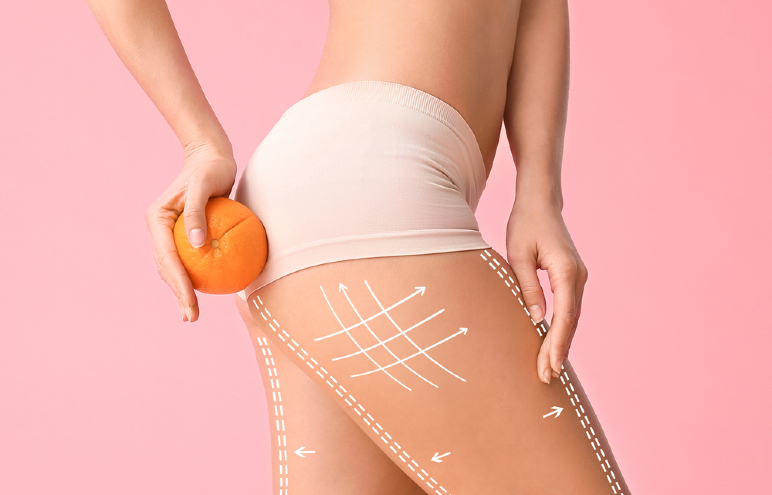
Even with ideal planning and execution, revision may become necessary over time due to:
- Anatomical shifts (e.g., weight changes, muscle development, aging)
- Initial surgical technique (e.g., poor implant positioning, pocket design)
- Tissue response (e.g., scarring, capsule formation, fat absorption)
- Implant design (some older models are more prone to hardening or edge visibility)
This is why at Dite Plastic Surgery, we emphasize foundational planning before your first procedure — mapping muscle layers, fat distribution, and mobility patterns to ensure the implant becomes part of your body’s natural framework, not just an added volume.
How Is Hip Implant Correction Performed?
Revision hip surgery is more complex than primary surgery — requiring not just aesthetic judgment, but surgical adaptability. Here's how we approach it at Dite:
Full 3D Evaluation
We start with advanced imaging and movement analysis to understand how the implant sits in both static and dynamic states.
Capsule & Pocket Management
If scar tissue is causing problems, we perform capsulectomy (removal) or capsulotomy (release), and reconstruct the pocket for optimal implant placement.
Implant Replacement (If Needed)
In some cases, we switch to a better-shaped or custom-size implant. We often use soft, cohesive silicone models with a lower risk of edge visibility and better tissue adaptation.
Fat Grafting for Contour Refinement
To soften transitions and improve blending, we may layer micro-fat grafting around the implant — especially helpful in patients with low body fat.
What Many Patients Don’t Realize
Revision doesn’t mean failure — it means refinement. The hip line is one of the most delicate curves on the body, and even 1–2 cm of misalignment can change your overall silhouette.
At Dite, we believe revision surgery is not about "fixing" a mistake, but realigning your shape to match your natural anatomy and aesthetic vision. Especially for international patients or those who’ve had surgery elsewhere, a personalized consultation can uncover what’s really causing your concern — and what can be done about it.
How Correction Is Performed at Dite
Every revision surgery starts with a thorough assessment: not just of the implant, but of your soft tissue, fat distribution, and muscular balance. We use 3D imaging to evaluate how the implant sits in relation to your natural curves.
Correction may involve:
- Repositioning or removing the implant
- Replacing it with a smaller, more anatomically shaped version
- Adding fat grafting for softness and blending
- Performing selective liposuction to sculpt the transition zones
- Supporting healing with regenerative treatments like PRP or ultrasound therapy
Dr. Jun Wook Lee, with over 20 years of surgical experience and advanced training in body contouring, leads each correction with an eye for both anatomy and artistry. His goal is not just to fix — but to refine.
When to Seek a Consultation

If you're unsure whether what you're experiencing is normal, here’s a good rule: if it's bothering you, it's worth asking. You don’t need to wait for a major complication to pursue correction. In fact, the earlier you intervene, the simpler the refinement process tends to be.
At Dite, we approach every case with respect and care — whether you had your procedure overseas or locally, recently or years ago. Your body is your own, and your satisfaction matters.
Ready to Reclaim Your Shape?
If your hip implants no longer feel aligned with your body or goals, we invite you to explore your options in a personalized consultation. At Dite Plastic Surgery, we combine technical mastery, surgical sensitivity, and body-focused planning to help you feel whole again — with results that look as natural as they feel.
Book your evaluation with Dr. Jun Wook Lee in Seoul today — and begin the journey toward comfort, proportion, and renewed confidence.
Articles
Evidence-based surgical guides, clinical insights, and recovery resources from Dite Plastic Surgery.

The Top 5 Benefits of Hip Implant Surgery
"Discover the top 5 benefits of hip implant surgery, from pain relief to improved mobility. Learn how it can enhance your quality of life today!"
Learn More

The Risks and Benefits of Hip Revision Surgery Explained
Discover the risks and benefits of hip revision surgery, from recovery to outcomes, to make informed decisions. Learn more today!
Learn More

Why Abdominal Surgery Is the Ultimate Solution for Stubborn Belly Fat
Discover why abdominal surgery is the best solution for stubborn belly fat. Learn benefits, risks & results to achieve your dream body today!
Learn More