Specialized Breast & Body Contouring Center in Seoul · Dedicated 1:1 International Patient Concierge


Articles
What Are the Key Differences Between a Tummy Tuck and Liposuction?
Discover the key differences between a tummy tuck and liposuction. Learn which option suits your body from the experts at Dite Plastic Surgery in Gangnam.
Schedule a ConsultationWhat Are the Key Differences Between a Tummy Tuck and Liposuction?
An in-depth, experience-driven explanation from Dite Plastic Surgery, Gangnam
Patients often come to our clinic in Seocho with a familiar concern. They’ve researched abdominal contouring, scrolled through endless before-and-after photos, and talked to friends who’ve had “something done,” yet they still feel unsure:
“Do I need liposuction… or is a full tummy tuck what I actually need?”
It’s a fair question — and one that even strong, fit individuals struggle with. At Dite Plastic Surgery, where we specialize in breast and body procedures, this distinction is one of the most important parts of the consultation. The procedures can create vastly different outcomes, and choosing the wrong one can lead to frustration or underwhelming results.
Below, I’ll explain the differences the way we do in-clinic: clearly, honestly, and grounded in real surgical experience — especially within the refined aesthetic standards of Gangnam.
Why These Procedures Get Confused in the First Place
Both liposuction and tummy tuck aim to create a flatter, more sculpted abdomen — but they correct different anatomical problems.
Patients often expect liposuction to tighten skin or assume that a tummy tuck will remove all fat; in reality, neither procedure is a magic catch-all. Understanding exactly what they address is the key to determining which aligns with your body.
Tummy Tuck (Abdominoplasty): A Structural Repair, Not Just a Cosmetic Trim
A tummy tuck is the procedure people often need after weight loss, pregnancy, or major body changes — though they don’t always realize it until the consultation.
What a Tummy Tuck Actually Fixes
Loose or stretched abdominal skin
When skin loses elasticity, no workout can make it contract again.Separated abdominal muscles (rectus diastasis)
Common after pregnancy; it creates a persistent roundness even in slim patients.Excess lower-abdominal tissue
Folds, creases, and overhangs are signs that tissue removal — not fat removal — is needed.Umbilical laxity or distortion
The navel often becomes stretched or elongated; a tummy tuck reshapes it.
What Patients Often Feel Before Choosing It
- “My stomach collapses when I bend.”
- “I’ve lost weight, but the skin just hangs.”
- “I look bloated even after core workouts.”
- “My belly has a softness I can’t control — it doesn’t feel like fat.”
What the Surgery Involves
- Removing excess skin
- Tightening underlying muscles
- Recreating a natural-looking navel
- Smoothing and strengthening the abdominal wall
At Dite, we approach it almost like renovating the framework of a house — restoring the foundation before polishing the exterior.
Liposuction: Sculpting Volume, Not Tightening Skin
If a tummy tuck is structural, liposuction is shaping.
What Liposuction Removes
- Stubborn fat pockets under the skin (subcutaneous fat)
- Areas resistant to diet and exercise
- Thickness that hides natural muscle lines
What It Cannot Do
- Tighten loose or crepey skin
- Repair muscle separation
- Remove folds or draped tissue
- Fix sagging around the belly button
Even the most advanced liposuction technique in Korea — including high-frequency tightening devices that we use at Dite — cannot replace skin that is severely stretched.
Typical Patient Indicators
- “I can pinch fat, but the skin itself isn’t loose.”
- “My upper belly is smooth, but my lower belly holds stubborn fat.”
- “I want a slimmer waist, not skin removal.”
These are the ideal liposuction cases.
The Key Differences — From a Surgeon’s Perspective

1\. Skin Quality Determines Everything
This is the first thing we assess at Dite.
- Loose skin = tummy tuck
- Elastic skin = liposuction
- Borderline elasticity = hybrid approach
I often tell patients, “I can remove fat, but I cannot tell skin to contract if it doesn’t have the ability to.”
2\. Muscle Tone Matters More Than Expected
Many people don’t realize their abdominal muscles have separated until we perform palpation or ultrasound in consultation.
Even slim athletes sometimes require muscle repair if the connective tissue is stretched.
If muscles are separated, liposuction will make the abdomen smaller, but not flatter.
3\. Scars and Recovery Look Different
- Tummy Tuck: hip-to-hip scar, deeper structural healing
- Liposuction: small 3–5 mm entry points
In Korea, many patients prioritize discreet healing — which is why a careful approach to scar placement and aftercare is a hallmark of Dite’s process.
4\. Results Feel Different
- Tummy tuck: a firmer, smoother, more “held-in” abdomen
- Liposuction: more definition and contour without removing skin
Think of it like tailoring:
Liposuction “takes in” the volume;
A tummy tuck “reconstructs” the garment itself.
Which Procedure Is Right for You? A Realistic Breakdown
Choose a Tummy Tuck if You Have:
- Loose skin after weight loss
- Postpartum belly changes
- Stretch marks concentrated on lower abdomen
- Soft, collapsed skin folds
- Bulging from muscle separation
Choose Liposuction if You Have:
- Good skin elasticity
- Stubborn fat despite fitness
- A desire to slim or define the waist
- No wrinkling or folding of the skin
You May Need a Hybrid Approach if:
- The skin is mildly loose but not hanging
- Fat pockets distort the waistline
- You want refinement without a full surgical incision
At Dite, hybrid contouring combines liposuction with energy-assisted tightening and small-area excision if needed — a popular choice among younger patients or those aiming for a natural Gangnam-style silhouette.
What Many Patients Don’t Realize Until Consultation
There’s a moment that often happens during abdominal evaluations — a quiet “oh…”
That moment comes when a patient sees, often for the first time, the difference between fat thickness and skin laxity under guided examination.
For example:
- A patient who believed they needed liposuction is surprised to learn they actually have very little fat — it’s the skin that causes the bulge.
- Another patient who wants a tummy tuck discovers their skin elasticity is excellent, and targeted liposuction will give them the shape they want without a large incision.
These distinctions aren’t obvious until you feel the tissue and see how it responds to subtle lifting, folding, and muscle engagement.
How Dite Plastic Surgery Tailors the Decision
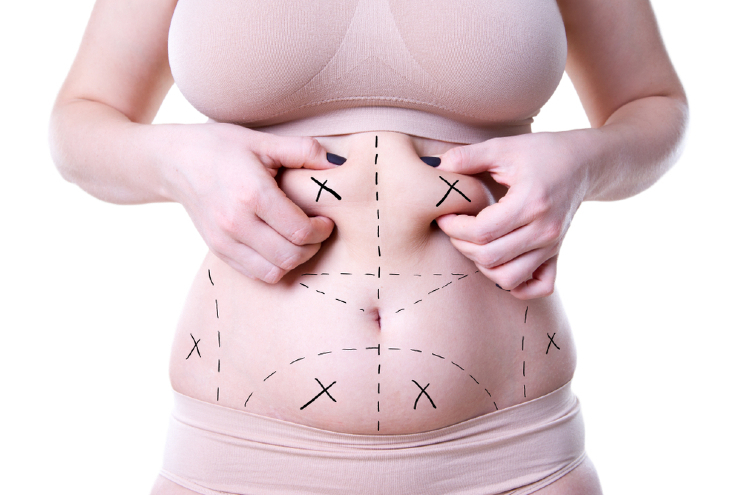
At Dite, body contouring isn’t a formula — it’s a customized experience shaped by Dr. Jun Wook Lee’s deep background in reconstructive anatomy and aesthetic proportioning.
Our Approach Includes:
- Elasticity mapping of the skin
- Ultrasound evaluation for diastasis
- 3D contour planning based on Korean aesthetic standards
- Artistic design of waist-to-hip transitions
- Post-op care with high-frequency therapy, lymphatic drainage, and scar optimization
Our philosophy is simple:
A flat stomach should look natural even when relaxed, not just in perfect posture.
So, What Is the Key Difference?
A tummy tuck repairs and reshapes the abdomen.
Liposuction sculpts and refines it.
One restores structure; the other removes volume.
In many ways, the choice isn’t about preference — it’s about anatomy.
If You’re Unsure Which Procedure You Need
Feeling uncertain is normal. Most patients cannot diagnose their own skin elasticity or muscle separation — nor should they.
If you’re weighing the decision between liposuction and a tummy tuck, a personalized evaluation at a body-focused clinic like Dite Plastic Surgery can give you clarity built on expertise, not guesswork.
A consultation with Dr. Jun Wook Lee will help you understand exactly what your tissue needs — and how to achieve a refined, natural result that truly suits your body and goals.
Articles
Evidence-based surgical guides, clinical insights, and recovery resources from Dite Plastic Surgery.

The Top 5 Benefits of Hip Implant Surgery
"Discover the top 5 benefits of hip implant surgery, from pain relief to improved mobility. Learn how it can enhance your quality of life today!"
Learn More

The Risks and Benefits of Hip Revision Surgery Explained
Discover the risks and benefits of hip revision surgery, from recovery to outcomes, to make informed decisions. Learn more today!
Learn More

Why Abdominal Surgery Is the Ultimate Solution for Stubborn Belly Fat
Discover why abdominal surgery is the best solution for stubborn belly fat. Learn benefits, risks & results to achieve your dream body today!
Learn More