Specialized Breast & Body Contouring Center in Seoul · Dedicated 1:1 International Patient Concierge


Articles
What Is the Difference Between Hip Implants and Hip Lifting?
Discover the key differences between hip implants and hip lifting — and learn which hip enhancement technique best suits your body goals and proportions.
Schedule a ConsultationWhat Is the Difference Between Hip Implants and Hip Lifting?
If you've ever looked in the mirror and felt that your lower body seemed a bit flat, or that your hips lacked curve or definition — you're not alone. In a place like Seoul, where aesthetic contouring is often subtle but sophisticated, the shape of the hips has become an increasingly important part of overall body harmony. Whether it’s to balance the waist-to-hip ratio or to enhance volume in the “hip dip” area, more patients today are seeking refined solutions.
Two of the most commonly discussed procedures in this category are hip implants and hip lifting. While they may sound similar, they differ dramatically in technique, intent, and ideal candidate. Understanding these differences is crucial when choosing the right approach for your unique body.
Why Hip Shape Matters — Especially in Korean Aesthetics
In Korean beauty ideals, harmony and proportion matter just as much — if not more — than size. At Dite Plastic Surgery, we see many patients whose primary concern isn't volume, but proportion. A narrow waist with underdeveloped hips can make the lower body appear “boxy” or unbalanced, especially when viewed from the back or side.
Some patients come to us after noticing how clothing fits — skirts riding unevenly, jeans gaping at the hips, or dresses lacking that smooth hourglass line. Others simply want to correct a genetically “flat” silhouette or volume loss due to aging or weight fluctuations. Whatever the reason, both hip implants and hip lifting aim to reshape — but they do so in very different ways.
What Are Hip Implants?
Hip implants are a surgical procedure involving the insertion of silicone prosthetics into the hip area. These solid implants are specifically designed to add volume and projection to the upper lateral buttocks and outer hip — especially useful in patients who lack enough fat for transfer.
How Hip Implants Work:
- Performed under general anesthesia
- Incision is typically placed in the upper gluteal crease or lower back
- A pocket is created within the muscle to place the implant securely
- The shape and size of the implant are customized based on your hip contour goals
- Surgery time: about 2–3 hours
- Initial recovery: 2–3 weeks, with full results in 3–6 months
What many patients don’t realize is: Hip implants are not about exaggeration. Done properly, they subtly extend the hip line outward — giving the pelvis a more feminine curve without looking artificial. At Dite, our surgical planning uses 3D contour mapping to avoid over-projection and ensure the implant blends naturally with the surrounding tissue.
Best for:
- Very lean patients with little body fat
- Those seeking a permanent, structural solution
- Patients wanting a stronger curve at the outer hips
What Is Hip Lifting?
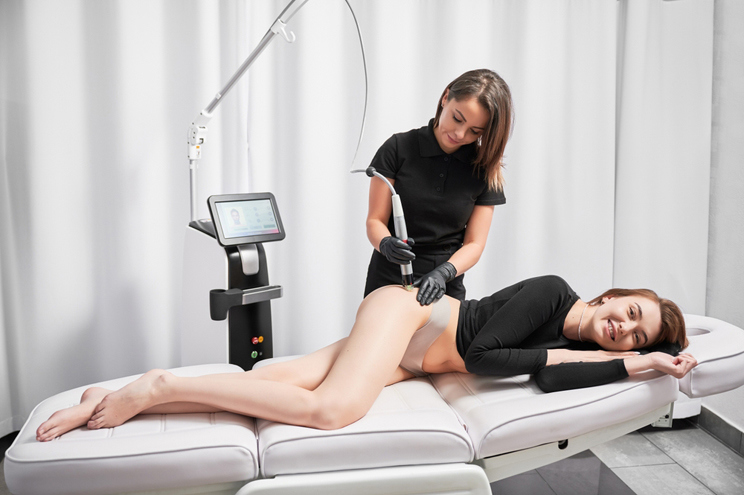
Hip lifting, sometimes referred to as a lateral hip lift or hip contouring lift, is a skin-tightening and reshaping procedure, often combined with liposuction or fat transfer. Rather than adding volume, hip lifting aims to reposition and sculpt existing tissue to enhance the silhouette.
At Dite Plastic Surgery, we often use this approach for patients who struggle with hip dips, sagging skin, or uneven fat distribution around the lateral hip area. This is particularly common after dramatic weight loss or aging.
How Hip Lifting Works:
- Small incisions made near the hip or flank
- Lifting and tightening of sagging tissue or skin
- Often combined with fat grafting (from the waist, thighs, or abdomen)
- Can include RF-assisted liposuction or high-frequency skin tightening for added smoothness
- Less invasive than implants, but requires precision to avoid scar visibility
Think of hip lifting as refining the silhouette from within — smoothing, tightening, and filling where needed to correct dips or flattening without relying on foreign material.
Best for:
- Patients with mild to moderate hip sagging or volume loss
- Post-weight-loss body contouring
- Those looking for more natural, subtle enhancement
Key Differences: Hip Implants vs. Hip Lifting
Aspect | Hip Implants | Hip Lifting |
|---|---|---|
Goal | Add volume & projection | Reshape and tighten existing tissue |
Invasiveness | Moderate to high (general anesthesia) | Mild to moderate (can be local or twilight sedation) |
Ideal Patient | Lean, minimal fat for grafting | Mild sagging, fat present but uneven |
Materials Used | Silicone implant | Patient’s own tissue or fat |
Scar Location | Hidden in gluteal crease or lower back | Discreet along waistline or lateral hip |
Recovery Time | 2–3 weeks (limited sitting, sleeping on side) | 1–2 weeks (milder swelling, less discomfort) |
Longevity | Permanent, but implant may require revision in 10–20 yrs | Long-lasting, especially if combined with fat grafting |
What Patients Often Ask Us at Dite
“Will I look natural?”
Yes — if the right procedure is selected. At Dite, natural integration with your body frame is the priority. We avoid overly round or exaggerated contours, and use soft tissue mapping to align your hips with your waist and thighs. Whether through implant placement or fat redirection, the goal is always balance.
“Can I combine hip procedures with other surgeries?”
Absolutely. Hip reshaping is frequently done alongside liposuction, BBL (Brazilian Butt Lift), or tummy tuck to create a fully harmonized silhouette. Our signature body contouring plans often involve sculpting the waist and thighs first — then enhancing the hips for proportional flow.
“How do I know which one I need?”
This is where expertise matters. Dr. Jun Wook Lee performs a detailed aesthetic analysis, often using 3D imaging, to assess your fat reserves, skin elasticity, and muscle tone. Sometimes the best result comes from combining techniques — such as a mini hip lift with micro-fat grafting to fill in small dips.
A Surgeon’s Perspective: What We See Often But Rarely Talk About

One common misconception among patients is that hip implants are “fake” looking, while fat grafting is always more natural. In truth, poor results usually stem from bad design, not the method itself.
We’ve treated patients who’ve had overly aggressive grafting elsewhere — resulting in lumpy or uneven hips due to fat necrosis. Others come in worried about implant “movement,” which is extremely rare when the implant is properly placed within the muscular plane.
In both cases, it’s not about choosing the trend — it’s about choosing the right tool for your anatomy.
Why Dite Plastic Surgery for Hip Enhancement?
At Dite, hip reshaping is not a one-size-fits-all procedure. It’s a precision-crafted design — guided by the patient’s proportions, muscle dynamics, and aesthetic vision.
Dr. Jun Wook Lee’s experience in both reconstructive and aesthetic surgery (including training from MD Anderson Cancer Center) gives him a unique understanding of tissue behavior — especially in areas like the hip where structure and softness must coexist.
We use:
- Advanced fat purification systems for smoother grafts
- High-frequency liposculpture for even contouring
- Minimal-scar lifting techniques
- Meticulous recovery protocols to protect your new shape
Considering Hip Contouring? Here’s Where to Start
If you’ve been staring at your reflection, wondering why your silhouette feels incomplete — you’re not imagining it. The hips play a quiet but powerful role in overall body proportion. Whether you need volume, lift, or gentle refinement, the key is customization, not standard templates.
At Dite, we take the time to understand not just your goals — but your structure, lifestyle, and long-term confidence.
If you're thinking about subtle enhancement, book a consultation at a body-focused clinic like Dite. A personalized evaluation with an expert like Dr. Jun Wook Lee can help you plan a refined, natural outcome that fits your body — and your life.
Articles
Evidence-based surgical guides, clinical insights, and recovery resources from Dite Plastic Surgery.

The Top 5 Benefits of Hip Implant Surgery
"Discover the top 5 benefits of hip implant surgery, from pain relief to improved mobility. Learn how it can enhance your quality of life today!"
Learn More

The Risks and Benefits of Hip Revision Surgery Explained
Discover the risks and benefits of hip revision surgery, from recovery to outcomes, to make informed decisions. Learn more today!
Learn More

Why Abdominal Surgery Is the Ultimate Solution for Stubborn Belly Fat
Discover why abdominal surgery is the best solution for stubborn belly fat. Learn benefits, risks & results to achieve your dream body today!
Learn More